The International Trade Blog  Import Procedures
Duty Drawback on Exports: What You Need to Know
On: September 7, 2026 | By:  David Noah |
12 min. read
David Noah |
12 min. read
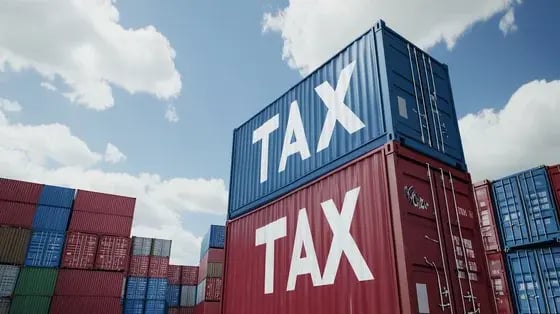
Duty drawback is one of the most valuable—and often overlooked—ways for U.S. companies to recover import costs. For exporters that import merchandise, export imported merchandise or export products made with imported components, those savings can be significant.
Duty drawback allows eligible companies to recover up to 99% of certain duties, taxes and fees paid on imported merchandise when that merchandise—or qualifying substituted merchandise or products made from it—is later exported or destroyed in accordance with U.S. Customs and Border Protection (CBP) rules.
With tariffs adding substantially to the landed cost of many imported goods, it is worth determining whether your company has drawback opportunities that are going unclaimed.
What Is Duty Drawback?
Duty drawback is a refund administered by CBP for certain duties, internal revenue taxes and fees collected when goods are imported into the United States. Depending on the type of drawback, a refund may be available when:
- The imported merchandise itself is later exported or destroyed.
- Qualifying substitute merchandise is exported or destroyed.
- Imported merchandise is used to manufacture a product that is later exported or destroyed.
- Qualifying substitute merchandise is used in manufacturing an exported product.
- Imported merchandise is rejected, returned or found defective and is subsequently exported or destroyed.
For most eligible claims, the maximum refund is 99% of the applicable duties, taxes and fees. Ordinary customs duties, certain internal revenue taxes, Merchandise Processing Fees (MPF) and Harbor Maintenance Taxes are among the amounts that may qualify. Antidumping and countervailing duties are not eligible for drawback.

How much money can duty drawback save?
Suppose a company imports merchandise and pays $100,000 in duties, taxes and fees that are fully eligible for drawback. If all other requirements are satisfied, the maximum potential refund could be $99,000.
That doesn't mean every drawback claim automatically produces a 99% refund. Substitution claims, for example, can be subject to additional valuation limitations that cap the refund at 99% of the lesser of the duties, taxes and fees associated with the imported merchandise or the amount that would apply to the substituted merchandise.
What Types of Duty Drawback Are Available?
The drawback statute includes several specialized provisions, but most exporters evaluating drawback will encounter the following categories.
Direct Identification Manufacturing Drawback
Direct identification manufacturing drawback applies when imported, duty-paid merchandise is used to manufacture or produce an article in the United States and the resulting article is subsequently exported or destroyed under CBP supervision without being used in the United States.
The amount of drawback generally cannot exceed 99% of the eligible duties, taxes and fees paid on the imported merchandise. The exported or destroyed articles generally must meet the applicable five-year time requirements.
Substitution Manufacturing Drawback
With substitution manufacturing drawback, the company does not necessarily need to use the actual imported merchandise in the exported product.
Instead, qualifying merchandise classified under the same eight-digit Harmonized Tariff Schedule of the United States (HTSUS) subheading as the imported merchandise may be used in manufacturing, subject to the applicable drawback rules. This can make drawback considerably more practical for manufacturers that commingle imported and domestic inventory.
The classification requirement is one reason accurate HTS classification and inventory records are so important when evaluating drawback.
Direct Identification Unused Merchandise Drawback
If imported merchandise is not used in the United States and is later exported or destroyed under CBP supervision, direct identification unused merchandise drawback may allow a refund of up to 99% of eligible duties, taxes and fees.
The merchandise generally must be exported or destroyed before the end of the five-year period beginning on the date of importation and before the drawback claim is filed.
Importantly, "unused" does not necessarily mean untouched. CBP regulations allow certain operations—such as testing, cleaning, repacking, inspecting, sorting, relabeling and some other activities—without automatically treating the merchandise as used, as long as those operations do not amount to manufacturing or production for drawback purposes.
Substitution Unused Merchandise Drawback
Substitution unused merchandise drawback may apply when qualifying merchandise is exported or destroyed instead of the actual imported merchandise.
In general, the imported and substituted merchandise must be classified under the same eight-digit HTSUS subheading. There is an important exception to understand: when the eight-digit HTSUS description begins with "other," additional rules may require the merchandise to share the same 10-digit statistical reporting number and for that 10-digit description not to begin with "other."
This is a good example of why companies should not evaluate substitution drawback by comparing product descriptions alone. Classification matters.
Rejected Merchandise Drawback
Rejected merchandise drawback may be available when imported, duty-paid merchandise:
- Does not conform to samples or specifications.
- Was shipped without the consignee's consent.
- Was defective at the time of importation.
- Was sold at retail and subsequently returned and accepted under qualifying circumstances.
The merchandise must be exported or destroyed within the applicable statutory period. Prior notice to CBP may also be required before exportation or destruction unless the claimant qualifies for a waiver.

How Long Do You Have to File a Duty Drawback Claim?
For most modernized drawback claims under 19 CFR Part 190, a complete claim must be filed within five years of the date the merchandise designated as the basis for the claim was imported. The qualifying exportation or destruction also must generally occur within the applicable five-year period.
This is an important change from older drawback guidance that referred broadly to a three-year deadline measured from exportation.
Certain specialized drawback provisions have different rules, so companies should confirm the deadline applicable to their specific claim rather than assuming every drawback transaction follows the same timeline.
Who Can Claim Duty Drawback?
The person entitled to claim drawback depends on the type of drawback and how the import, transfer and export transactions are structured.
For example, under direct identification unused merchandise drawback, the exporter or destroyer generally has the right to claim drawback but may assign that right to the importer or an intermediate party. Substitution claims have additional requirements concerning transfers, possession and assignment of drawback rights. Manufacturing drawback also permits the right to claim to be assigned under specified conditions.
This distinction matters because the importer and exporter do not always have to be the same company for a drawback opportunity to exist.
Companies that purchase imported goods from domestic suppliers, for example, should not automatically assume they have no drawback opportunity simply because they were not the importer of record. The transaction and supporting records need to be examined to determine whether the necessary drawback rights and import information can be transferred or assigned.
What Documents Are Required for Duty Drawback?
There is no single document package that applies to every claim. The records required depend on the type of drawback and the transactions involved.
A complete drawback claim generally includes the electronically filed drawback entry, applicable import-entry information, evidence of exportation or destruction and, when required, a Notice of Intent to Export, Destroy, or Return Merchandise for Purposes of Drawback on CBP Form 7553.
Companies also may need supporting records such as:
- Import entry and duty-payment information.
- Commercial invoices and purchase records.
- Export documentation and transportation records.
- HTSUS and Schedule B classifications.
- Inventory records tying imports, substituted merchandise and exports together.
- Bills of materials or formulas for manufacturing drawback.
- Manufacturing and production records.
- Transfer and assignment records.
- Certifications required for the particular type of claim.
CBP requires drawback-related records to generally be retained for three years after liquidation of the drawback claim, or longer when another law requires a longer retention period.
Accurate recordkeeping is especially important because drawback often requires companies to connect information across purchasing, importing, inventory, manufacturing and exporting systems.

How Do You File a Duty Drawback Claim?
Drawback claims must be filed electronically through a CBP-authorized electronic system. CBP's current guidance provides for electronic drawback filing through the Automated Broker Interface (ABI) in the Automated Commercial Environment (ACE).
At a high level, companies considering drawback should:
- Identify imports on which eligible duties, taxes or fees were paid.
- Identify related exports or destructions that may qualify under direct identification or substitution rules.
- Determine the correct drawback provision for each transaction.
- Confirm HTSUS classifications, quantities and required timelines.
- Establish the necessary audit trail linking the import, inventory or manufacturing activity and export.
- Determine who is entitled to claim drawback and obtain any necessary assignments or certifications.
- Calculate the allowable refund under the applicable drawback rules.
- Electronically file the complete claim and retain the supporting documentation.
Because drawback rules vary significantly by claim type, companies with substantial potential recoveries often work with a licensed customs broker, drawback specialist or trade attorney to establish their program.
Can You Claim Drawback on Section 301 or Other Additional Tariffs?
Not every additional U.S. tariff is treated the same way for drawback purposes.
Section 301 duties are eligible for duty drawback. Section 232 duties on covered steel and aluminum articles are not eligible, and antidumping and countervailing duties also cannot be recovered through drawback.
That distinction has become increasingly important as companies evaluate tariff-recovery opportunities. You should identify exactly which duty was paid rather than assuming that all additional tariffs qualify for the same refund treatment.
What about IEEPA tariffs?
This is an especially important current issue.
As of August 2026, CBP has a separate Consolidated Administration and Processing of Entries (CAPE) process for certain International Emergency Economic Powers Act (IEEPA) duty refunds being made pursuant to court order. CBP specifically encourages importers to include entry summaries that are eligible for drawback on their CAPE Declaration before filing a drawback claim.
Because the treatment of these duties is changing through the refund process, companies with affected entries should review current CBP guidance before incorporating IEEPA duties into a drawback calculation.
Does Duty Drawback Work the Same for Exports to Canada and Mexico?
No. Exports to Canada and Mexico require special attention.
The United States-Mexico-Canada Agreement (USMCA) retained restrictions on drawback that previously applied under NAFTA. For many qualifying transactions, drawback is subject to a "lesser of" rule based on the customs duties paid in the United States compared with the duties paid when the goods enter Canada or Mexico. Other limitations and exceptions also apply.
If Canada or Mexico is the export destination, do not assume the normal 99% calculation applies without reviewing the USMCA drawback rules.

How Can Exporters Determine Whether They Have a Drawback Opportunity?
A useful first step is to compare your import and export activity.
Ask:
- Are we paying U.S. duties, taxes or fees on imported merchandise?
- Do we later export some of those imported goods?
- Do we export domestic or imported merchandise classified under the same HTSUS subheading?
- Do we manufacture goods in the United States using imported components or materials and then export the finished products?
- Do we export or destroy imported merchandise that was defective, rejected or returned?
- Can we connect the import and export transactions through reliable classification, inventory and transaction records?
- Did the qualifying export occur within the applicable five-year period?
- Are any exports going to Canada or Mexico, where special USMCA rules may apply?
If the answer to one or more of these questions is yes, drawback may be worth investigating.
Accurate Export Records Make Drawback Easier to Support
One of the biggest challenges with drawback is not recognizing the opportunity—it's producing the records needed to support it.
Consistent product classifications, quantities, commercial documentation and export data can make it much easier to match qualifying exports with imports and build an audit trail.
Shipping Solutions Export Documentation and Compliance Software helps exporters create accurate export documents, maintain product and classification data, and file Electronic Export Information (EEI) through the Automated Export System (AES). Those records do not replace the drawback-specific information CBP requires, but maintaining clean, consistent export data can make it easier to identify potential drawback transactions and support the overall compliance process.
When duties represent a meaningful portion of your landed cost, overlooking drawback can mean leaving substantial amounts of money unclaimed.
Like what you read? Subscribe today to the International Trade Blog to get the latest news and tips for exporters and importers delivered to your inbox.
This article was first published in March 2022 and has been updated to include current information, links and formatting.