The International Trade Blog  Export Forms
The Export Shipping Documentation Process (Step-by-Step Guide)
On: April 20, 2026 | By:  David Noah |
12 min. read
David Noah |
12 min. read

The export shipping documentation process involves preparing, reviewing and submitting required documents—such as the commercial invoice, packing list and electronic export information (EEI)—to ensure goods can legally and efficiently move across international borders.
In a previous article, I explained the purpose of the 12 most common export documents and the information they typically include. This article expands on that discussion by showing how those documents fit into the overall export shipping documentation process—step by step—so you can ensure compliance, avoid delays and reduce costly errors.
Here’s how they work together:
Step 1: Receive an Inquiry
The first step in the export shipping documentation process is when someone inquires about buying your products. When a potential buyer expresses interest, they will often send a letter of inquiry outlining the terms of their interest along with a request for an informal or formal quote.
Step 2: Screen the Potential Buyer and Country
After you receive an inquiry from a buyer, you first need to make sure you can legally do business with them. That means screening them against the various government denied and restricted party lists. You can manually screen their name, company name and address by checking each of the scores of lists published by the U.S. government, or you can automate that process by using Shipping Solutions Restricted Party Screening Software (free trial), which checks against names and addresses against more than 300 different lists.
If your buyer shows up on any of the lists, you cannot do business with them. If they do not show up, proceed with caution.
The screening step also includes making sure you can ship your goods to the buyer’s country. In some cases, you can ship only if you apply for an export license. It’s best to complete the licensing process as early as you can to avoid causing delays.

-26_101024.webp?width=300&height=478&name=2478489_ProformaInvoice(English)-26_101024.webp) Step 3: Provide a Proforma Invoice
Step 3: Provide a Proforma Invoice
After screening your buyer and their country, you may need to provide the buyer with a proforma invoice for the transaction. A proforma invoice (a preliminary invoice used as a formal quote) is often the first impression you make on your buyer, so make sure you do it right. It acts like a quote and looks like a commercial invoice, and it can be used to arrange financing for the purchase.
If the proforma invoice results in an order, the final commercial invoice will closely resemble the proforma invoice. That means all of the costs included in the quotation are firm and may not vary beyond the terms outlined in the letter of credit.
Certain countries require a proforma invoice, particularly when they tightly control their currency, require import permits, or enforce import quotas on specific goods. For a deep dive into the benefits and features of this document, see Understanding the Proforma Invoice: An Essential Guide for Exporters.

Step 4: Finalize the Sale
After you send the proforma invoice, the buyer will either reject or accept your proposal. As part of the acceptance process, they will often negotiate the terms of the sale, resulting in a verbal or written contract.
These negotiations should cover not only price, but also key export transaction details, including:
- Payment terms (such as cash in advance, open account or something in between).
- The agreed-upon term of sale, typically one of the 11 Incoterms 2020 rules.
- How the goods will be shipped.
- Who is responsible for shipping the goods.
- Who will hire the freight forwarder or carrier.
- Who is responsible for filing the electronic export information through AES.
- How the transaction will be paid. If you’re using a letter of credit, you need to make sure you have the necessary documents to satisfy its requirements.
- Which documents need to be provided by each party. As the exporter, you’ll need to meet whatever regulations your buyer may have in their own country as well as the documentation and regulation requirements of the U.S.
By addressing these important details before you ship, you’ll save a lot of time and avoid potential headaches—especially if you have specific deadlines to meet.
Once you've reached agreement on these points and any others you or your buyer wants to discuss, you'll receive the order, which may appear in the form of a purchase order.
Step 5: Request an End-User Certificate (If Required)
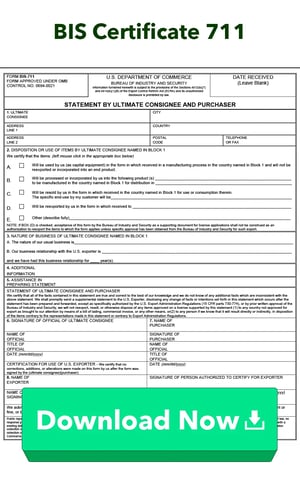
In some cases, exporters request that their international customer provide a signed End-Use or End-User Certificate as part of their due diligence to ensure the shipment complies with U.S. export regulations. In certain situations, regulations require a signed certificate from the foreign buyer; in others, it is considered a best practice to reduce compliance risk.
With the End-User Certificate, the buyer affirms the intended end use and end user of the items being exported. Often, the seller also conveys related legal requirements that apply to the goods (i.e., that they are subject to the Export Administration Regulations (EAR) and may not be diverted onward to a prohibited end user, end use or destination), and the buyer certifies that it understands those requirements and will comply with them.
Items subject to the EAR may require a BIS-711 or equivalent (meeting the criteria of Supplement No. 3 to 15 C.F.R. 748), while those under the jurisdiction of the Directorate of Defense Trade Controls (DDTC) call for a DSP-83. For more details about End User Certificates, check out What Are End-User Certificates and When Do You Need One?
Step 6: Prepare the Goods and the Shipping Documents
-23_101024.webp?width=300&height=478&name=2478489_CommercialInvoice(English)-23_101024.webp)
Once you have finalized your sale and prepared your goods for export, you need to create the required export shipping documents. Your shipment may require you include these five export forms:
Commercial Invoice
The commercial invoice is almost always required and is used by multiple parties throughout the shipment process. U.S. Customs and Border Protection may review it for export control purposes, while the customs authority in the destination country uses it to clear the goods for import. The buyer may also use the invoice to release payment through their bank, and the exporter may rely on it to support an insurance claim if damage occurs during transit.
The commercial invoice includes these important data elements. An exporter typically includes three copies of the invoice with the original signed in blue ink.

Packing List
Most shipments also include a packing list, which provides the freight forwarder, carrier and ultimate consignee with information about your shipment, the packing details and the marks and numbers noted on the outside of the boxes.
Customs authorities in the importing country may use the packing list to support inspections and compliance checks. It is also required when filing a claim with a carrier or insurance provider in the event of cargo damage or loss.

 Certificate of Origin
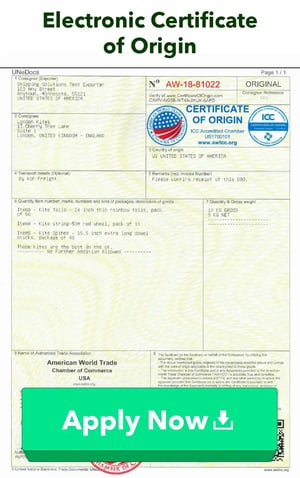
While some countries will accept a statement of origin on the commercial invoice, the customs authorities of other countries may require a separate document titled a certificate of origin. The certificate of origin is documentary evidence that the goods originated in the country stated on the certificate, commercial invoice or packing list.
If the United States has a free trade trade agreement (FTA) with the destination country—and your goods qualify for reduced tariffs under the terms of the agreement—you may want to provide the specific form for that trade agreement. You'll find free PDF templates of many of these FTA certificates of origin on the Shipping Solutions website.

Shipper's Letter of Instruction (SLI)
Based on the terms agreed upon in Step 4—particularly who is responsible for filing Electronic Export Information (EEI) through AES— you may need to prepare a Shipper’s Letter of Instruction (SLI). An SLI provides your company with a written record of who received the shipping documents, who to contact for questions, who to contact for proof of export and who issued the export control information that was used to support the decision to export the goods.
In a routed export transaction—unless you specifically negotiate for filing—the forwarder/buyer will most likely file through AES. Otherwise, you can file through AES yourself or your agent will file through AES for you. If your agent files, you must provide an SLI as well as power of attorney to file on your behalf.

Bills of Lading
You will need at least one—but you may need several—bills of lading to accompany your export. For example, you may need an inland bill of lading to move your goods to a port or airport. For moving goods out of the United States you will need a separate bill of lading, which is usually filled out by your freight forwarder. If your shipment includes hazardous materials, you may also need to complete a dangerous goods declaration at this stage.

Step 7: Run a Restricted Party Screening (Again)
Right before the goods ship, run one last restricted party screening to make sure nothing has changed on any denied or restricted party list. If you use Shipping Solutions Restricted Party Screening Software to do this, your screenings will automatically be documented in the software, providing a paper trail of your due diligence in the event of an audit.
Step 8: Prepare Final Documents and Ship Your Goods
Before exporting, you may need to complete additional documents depending on the terms of your sale, payment method, or destination country requirements. These may include documents specified in the sales contract, required under a letter of credit, or requested by your freight forwarder. Examples include a bank draft or, for temporary exports, an ATA carnet.
Once all your documents are accurately completed and you fulfilled the other steps of this export process, go ahead and ship your goods!
One Last Tip: Recordkeeping
Don't forget that not only must you prepare a variety of documents for your export shipment, it is also your responsibility to keep copies of all of your documents, as well as all other correspondence throughout the sale, including phone calls, emails, etc. After all, it is your job—not your buyer’s, your forwarder's or anyone else’s— to document the whole process. U.S. regulations generally require these records to be kept for at least five years, making proper recordkeeping an essential part of compliance.
Like what you read? Subscribe today to the International Trade Blog to get the latest news and tips for exporters and importers delivered to your inbox.
This article was first published in January 2018 and has been updated to include current information and formatting.