The International Trade Blog  International Sales & Marketing
Incoterms Comparison: DDP vs. DAP—What's the Difference?
On: November 11, 2026 | By:  David Noah |
11 min. read
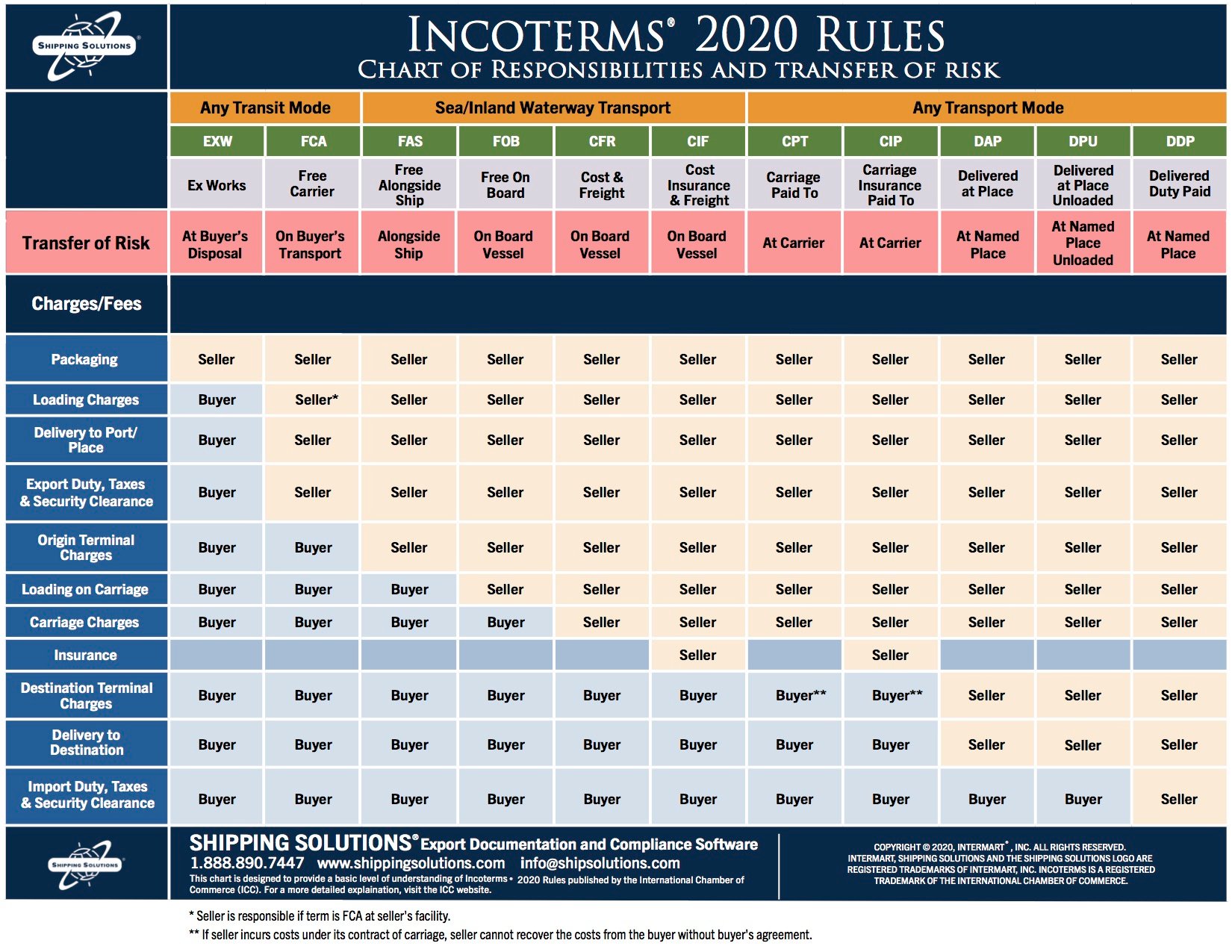
 The Incoterms® rules DDP and DAP are very similar: Both can be used with any mode of transport, and both generally transfer the risk of loss of or damage to the goods when they are at the buyer’s disposal at the named destination, ready for unloading. The main difference is import clearance: Under DDP, the seller handles it and pays the import duties and taxes; under DAP, the buyer does. For these reasons, exporters may confuse the two. In this article, I’ll define DDP vs. DAP and share the differences between the two, so you can make an informed decision on which term is the best choice for moving your goods.

What Does Delivered Duty Paid (DDP) Mean?
Delivered Duty Paid (DDP) means the seller delivers the goods at the named destination, cleared for import and ready for unloading from the arriving means of transport. The seller arranges transportation and bears the costs and risks up to delivery, subject to the exceptions in the rules. This Incoterm places the most responsibility on the seller.
DDP Responsibilities and Transfer of Risk
Under the Incoterms® 2020 rules, which remain the current edition as of 2026, DDP requires the seller to:
- Arrange transportation to the named place of destination.
- Carry out and pay for export, transit and import clearance formalities, where applicable.
- Pay applicable duties, taxes and other customs charges.
- Bear the risk of loss of or damage to the goods until delivery, subject to the exceptions in the rules.
- Place the goods at the buyer’s disposal on the arriving means of transport, ready for unloading.
With DDP, the seller is responsible for import duties and applicable import taxes, including value added tax (VAT), unless the parties expressly agree otherwise in the sales contract. This is extremely risky for the seller, because they may not be fully aware of the import clearance procedures in the country of import or how to find a competent local customs broker. The seller may also face currency exchange risks if freight, duties, taxes or other charges are payable in a foreign currency.
Because of these risks, the seller may want to use the term Delivered at Place (see below) or Delivered at Place Unloaded (DPU).
With DDP, risk generally transfers to the buyer when the goods are at the buyer’s disposal at the agreed destination, cleared for import and ready for unloading. The buyer is responsible for unloading. If unloading charges are included in the seller’s contract of carriage, the seller cannot charge them separately to the buyer unless otherwise agreed.
The destination and delivery point should be stated clearly and precisely in the sales contract and shipping documents, along with the version of the rules—for example, “DDP [buyer’s full delivery address], Incoterms® 2020.”
What Does Delivered at Place (DAP) Mean?
Delivered at Place (DAP) means the seller delivers the goods at the named destination on the arriving means of transport, ready for unloading. The seller arranges transportation and generally bears the transport costs and risks up to delivery, while the buyer handles import clearance and pays the applicable import duties and taxes.
DAP is a flexible term that can be used with any mode of transport or a combination of modes. The named destination could be a port, airport, the buyer’s premises or another agreed location. It does not have to be a foreign destination or a border crossing: Incoterms® rules can also be used in domestic sales.
DAP may sound similar to CPT (Carriage Paid To), and both can be used for multimodal transport. The key difference is when risk transfers: Under CPT, risk passes when the seller hands the goods to the carrier, even though the seller pays for carriage to the named destination. Under DAP, risk generally stays with the seller until delivery at the named destination.
DAP Responsibilities and Transfer of Risk
Under the Incoterms® 2020 rules, the buyer is responsible for unloading and for carrying out and paying for import clearance, including applicable duties, taxes and import-related inspection fees. If a customs broker is needed, the buyer arranges for one.
The seller handles export and transit clearance, where applicable, and must assist the buyer, at the buyer’s request, risk and cost, with documents or information needed for import clearance.
The seller is not required to unload the goods. However, if the seller’s contract of carriage includes unloading charges at the place of delivery, the seller may not recover those charges separately from the buyer unless the parties agree otherwise. Paying an unloading charge does not by itself move the unloading risk back to the seller.
With DAP, risk generally transfers when the goods are at the buyer’s disposal at the agreed destination, ready for unloading. Import clearance costs remain the buyer’s responsibility even if clearance takes place before the goods reach that destination.

What Is the Main Difference Between DDP and DAP?
The main difference is who handles import clearance and pays the applicable import duties and taxes. Under DDP, those responsibilities belong to the seller. Under DAP, they belong to the buyer.
Both rules generally transfer risk at the named destination, with the goods ready for unloading. Under both rules, the buyer is responsible for unloading; unloading charges may already be included in the seller’s transport contract.
DDP vs. DAP: Which Should You Use?
Because of the complex bureaucracy of import clearance procedures, the challenges of arranging customs clearance in destination countries, and a potential lack of knowledge around current import duty rates and rate changes, DDP can be an extremely risky term for the seller to choose. Exporters should be wary of using it without first confirming they can meet its obligations.
Before agreeing to DDP, confirm that the destination country’s customs and tax rules allow the proposed import arrangement. Choosing DDP does not itself authorize a U.S. seller to act as an importer or override local legal requirements. For example, HMRC imposes specific representation requirements on businesses not established in the UK that import into Great Britain.
If you do decide to use DDP but want to exclude VAT, agree on that variation explicitly in the sales contract. Specify exactly which tax is excluded, who will pay it, and whether delivery and risk transfer remain unchanged.
DDP can simplify the buyer’s arrangements, but the buyer must depend on the seller to successfully navigate these challenges.
Using the Incoterm DAP can be a better choice for an exporter who wants control over freight but wants the buyer to handle import clearance, duties and taxes. Confirm that the buyer is willing and able to meet those responsibilities.
Learn More about Incoterms 2020 Rules
If you are regularly involved in international trade, you need to understand the risks and responsibilities as defined by Incoterms 2020 rules, not just pick the term you always use. Start by getting a copy of ICC's Incoterms® 2020 Rules book.
For a more detailed understanding of which term or terms make the most sense for your company, register for an Incoterms® 2020 rules seminar or webinar offered by International Business Training. You can also read our articles about each of the Incoterms 2020 rules here:
- EXW (Ex Works)
- FCA (Free Carrier)
- FAS (Free Alongside Ship)
- FOB (Free On Board)
- CFR (Cost and Freight)
- CIF (Cost, Insurance and Freight)
- CPT (Carriage Paid To)
- CIP (Carriage and Insurance Paid To)
- DAP (Delivered at Place)
- DPU (Delivered at Place Unloaded)
- DDP (Delivered Duty Paid)
Like what you read? Subscribe today to the International Trade Blog to get the latest news and tips for exporters and importers delivered to your inbox.
This article was first published in July 2022 and was updated on October 13, 2026, to clarify responsibilities under the Incoterms® 2020 rules.