

The International Trade Blog 
Direct vs. Indirect Customs Representation: What’s the Difference?
On: November 4, 2026 | By:  Kayleigh Mileham |
4 min. read
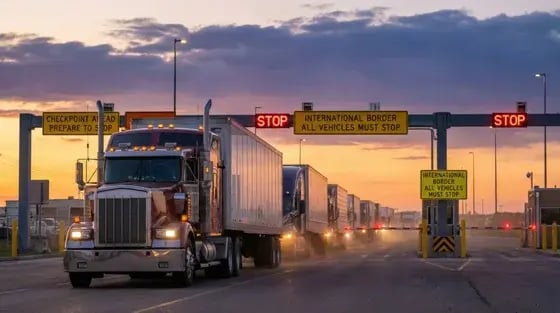 When goods cross a border, someone has to officially tell customs what they are, who is responsible for them and how they should be treated. If your company doesn’t have an office or registered presence in that country, you may need a customs representative to do that for you.
There are two different ways someone can act on your behalf: direct representation, where the representative acts in your company’s name, and indirect representation, where the representative acts in their own name but on your behalf.
The difference matters more than it sounds like it should, especially if your goods pass through more than one country on their way to their final destination.

A Quick Way to Picture It
Think about what happens when a courier tries to deliver a package and you’re not home.
- One option: a neighbor answers the door and signs for it, but the courier’s paperwork still shows it was delivered to you. The neighbor is just standing in physically. Everyone officially knows the package is yours.
- Another option: the package was never addressed to you at all. It’s addressed to your neighbor, “care of” you, because you don’t have an address there yourself. The neighbor’s name is what’s on record. Yours is just noted alongside it.
Customs works the same way.
What Is Direct Customs Representation?
Direct representation is the first version. A customs broker—a company whose job is handling customs formalities—declares your goods to customs in your company’s name. Customs can see clearly that the broker is acting on your behalf.
The catch: this option is only available if your company already has some kind of legal presence—an office, a registered branch—in that country. You can’t use this option if you’re not, in some formal sense, already “there.”
What Is Indirect Customs Representation?
Indirect representation is the second version. The broker declares the goods in their own name but on your company’s behalf. This arrangement generally allows a company to import goods into the EU without having an office or establishment there.
It’s a genuinely useful workaround, and a lot of international trade runs on it.
Do the Same Rules Apply to EU Imports and Exports?
You’d reasonably assume a country treats goods coming in and goods going out the same way. Often it doesn’t, and one specific case trips people up more than many others.
The European Union has one strict rule for anything leaving the EU: whoever is named on the export paperwork has to actually have a registered business inside the EU. There’s no “indirect” workaround for exports. Not in some EU countries, in all of them, no exceptions.
But when goods are coming into many EU countries, that flexible “indirect” option is often available.
Here’s where that causes a problem. A company ships goods into an EU country. It goes smoothly because indirect representation was available. Later, those goods—or a related shipment—need to leave the EU again, and the company assumes the same arrangement will cover the outbound shipment.
It may not. Getting goods into a country and getting them out of a country are governed by separate rules, and on the way out of the EU, the rules are stricter.

Why This Matters for Your Shipments
If your goods only cross one border, this may never come up. But if a shipment has more than one leg—for example, goods arriving in one country and then moving on to another—the entering and leaving requirements need to be checked separately for each leg.
Don’t assume that because getting goods in was straightforward, getting them back out will be too.
This is exactly the kind of thing that catches experienced shippers, not just people new to it, because the assumption feels reasonable right up until it causes a delay.

What Should You Ask Before Shipping?
For any international shipment, there are really two separate questions to ask, not one:
- How do these goods get legally recognized when they arrive?
- How do these goods get legally recognized when they leave?
The answer to one should never be assumed from the other.
Get Help Planning Your International Shipments
Understanding customs representation is one part of making sure your shipment can move smoothly from origin to destination. Documentation, customs requirements and VAT obligations also need to work together.
GLOBAL GATEWAY by Shipping Solutions helps U.S. exporters manage international shipping with expert logistics and compliance support, export document creation and discounted shipping rates.
Whether you’re entering a new market or planning a shipment with multiple legs, request a free Global Gateway consultation to discuss your route, requirements and the support your business needs.
Like what you read? Join thousands of exporters and importers who subscribe to Passages: The International Trade Blog. You'll get the latest news and tips for exporters and importers delivered right to your inbox.


