The International Trade Blog  International Sales & Marketing
FOB vs. FOB: Key Differences in Domestic and International Trade
On: September 9, 2026 | By:  Kari Crane |
10 min. read
Kari Crane |
10 min. read
 FOB means “Free On Board”—simple, right? Not exactly. And for one Shipping Solutions client, that misunderstanding nearly cost them thousands.
The exporter had been shipping domestically for years using “FOB Destination” to indicate they would cover delivery to the buyer’s location. So when they started selling to a customer in Germany, they did what they’d always done: they listed “FOB Destination” on the invoice. What they didn’t realize was that FOB under Incoterms 2020—the standard for international trade— meant something entirely different.
Instead of covering the ocean freight to Hamburg as intended, they would have inadvertently agreed to deliver only to the U.S. port. Their German buyer expected delivery to Europe. Had no one caught the mistake, both sides would have been left frustrated, the shipment sitting at the wrong dock.

FOB is one of the most misused terms in global trade, precisely because it means different things depending on where and how it's used. Let’s unpack what FOB really means in both domestic and international contexts—and how to make sure you’re using the right version in your transactions.

What Does FOB Mean in Domestic U.S. Shipping?
In the United States, FOB terms derive from the Uniform Commercial Code (UCC), the National Motor Freight Classification (NMFC) and industry customs. They’re not defined by a single source or authoritative body, like Incoterms rules. They specify where title and risk of loss transfer from the seller to the buyer.
Two of the most common variations include:
- FOB Origin: The seller bears the expense and risk of placing the goods with the carrier at the place of shipment; risk then generally transfers to the buyer.
- FOB Destination: The seller retains risk and ownership until the goods arrive at the buyer's location.
These terms are often paired with freight payment indicators, such as:
- Freight Collect
- Freight Prepaid
- Prepaid & Add
- Freight Allowed
In domestic transactions, freight-payment terms should be stated separately, and the sales contract should make clear how title is handled rather than assuming FOB alone answers every question.
What Does FOB Mean Under Incoterms 2020?
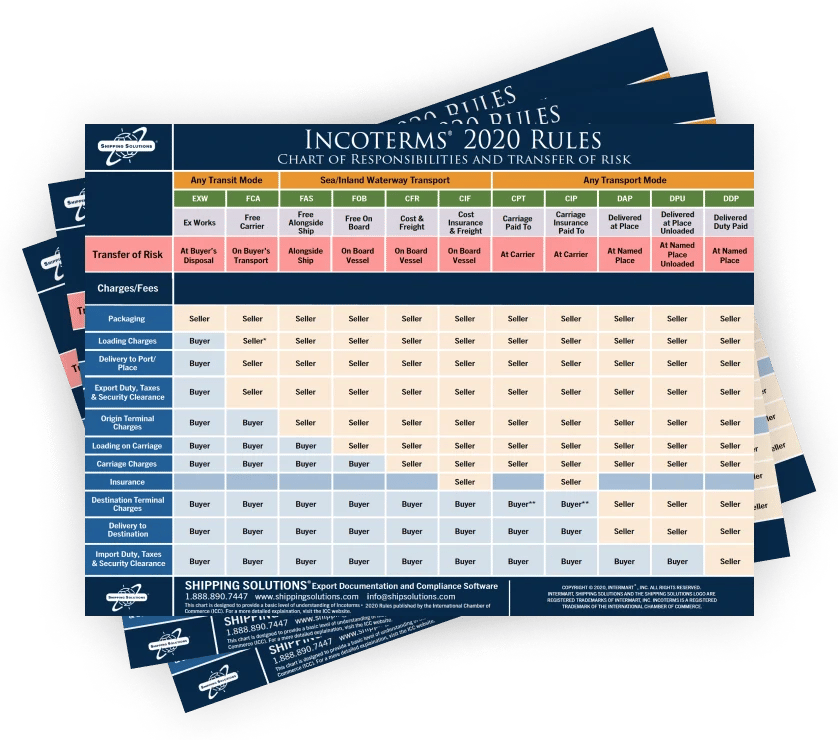
In international trade, FOB is one of the 11 Incoterms rules established by the International Chamber of Commerce (ICC). These rules help buyers and sellers clearly define responsibilities and costs when moving goods across borders.
Under Incoterms 2020, FOB (Free On Board):
- Is used only for sea and inland waterway transport.
- Specifies that the seller fulfills their obligation when the goods are loaded onto the vessel nominated by the buyer at the named port of shipment.
- Transfers risk to the buyer at the moment the goods are on board.
The buyer normally arranges and pays for the main carriage from the named port of shipment and bears the risk after the goods are on board. Neither party is required by the FOB rule to obtain cargo insurance, so insurance should be addressed separately. Buyer and seller should also identify the named port of shipment—and, when practical, the specific point within that port—in their sales contract.

Why the Difference Matters
Mixing up domestic and international meanings of FOB can lead to:
- Unexpected liability for damage or loss
- Unpaid freight charges
- Customs complications
- Contract disputes
As in the story at the beginning of this article, even experienced exporters can fall into the trap of assuming that the FOB they’ve always used domestically will work the same way internationally. It won’t.
That’s why choosing the right term—and understanding what it actually means—is essential.
A Better Alternative for Exporters: FCA (Free Carrier)
For containerized goods that are delivered to a carrier before they are loaded on board a vessel—as is typical at container terminals—FCA (Free Carrier) is generally more appropriate than FOB. FCA also offers more flexibility because it can be used for any mode of transport, including multimodal shipments.
Examples:
- FCA Seller’s Facility, Minneapolis, MN USA: Risk transfers when the goods are loaded on the truck at the seller’s location.
- FCA Freight Forwarder’s Warehouse, Miami, FL USA: Risk transfers when goods are delivered to the named location, ready for unloading.
Under FCA, the seller handles export clearance when required, and the named place makes clear where delivery occurs and risk transfers. That makes FCA a cleaner fit for many export transactions involving containerized or multimodal freight.
How Should Exporters Write FOB or FCA in a Contract?
Always identify the Incoterms rule, the named place or port and the version of the rules being used. For example: FOB Port of Houston, Texas, USA, Incoterms 2020 or FCA Seller’s Facility, Minneapolis, MN USA, Incoterms 2020.
Avoid writing “FOB Destination” when you intend to use Incoterms 2020. That phrase belongs to domestic U.S. trade usage and is not one of the ICC’s Incoterms rules.
Want to Get Incoterms Right? Free Resources to Help
Shipping Solutions has compiled several easy-to-use tools and guides to help you choose the right trade term every time:
- Incoterms 2020 Chart of Responsibilities: A downloadable visual breakdown of buyer and seller responsibilities.
- An Introduction to Incoterms: A beginner-friendly guide that explains each rule.
- Articles on All 11 Incoterms 2020 Rules: In-depth breakdowns of each term.
- Free Incoterms 2020 Webinar: Learn from the experts in this 80-minute overview.
Don’t let a three-letter acronym throw your entire trade deal off track. While FOB might look familiar, it carries different meanings depending on whether you're shipping domestically or internationally. Knowing the difference—and choosing terms that align with the specifics of your transaction—is essential for avoiding confusion and costly mistakes.
And when in doubt, use the resources above to make sure you’re on solid ground. Your contracts, your shipments and your bottom line will thank you.
Like what you read? Join thousands of exporters and importers and subscribe to the International Trade Blog to get the latest news and tips delivered to your inbox.