The International Trade Blog  Export Compliance
HTS Codes: The Importer’s Guide to U.S. Tariff Classification
On: August 26, 2026 | By:  Kari Crane |
18 min. read
Kari Crane |
18 min. read
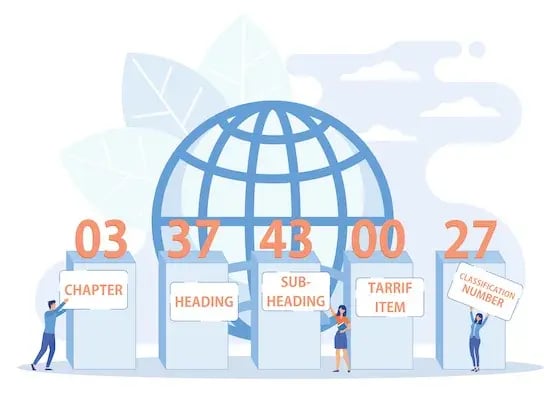
If you import goods into the United States, you need the correct Harmonized Tariff Schedule (HTS) classification for every product. The HTS number helps determine the applicable tariff rate, statistical reporting requirements and whether other import rules may apply.
An HTS code is the 10-digit statistical reporting number used to classify goods imported into the United States. The first six digits come from the international Harmonized System. The next two digits identify the U.S. tariff provision, and the final two digits provide additional statistical detail. Importers generally report all 10 digits when making entry.
Correct classification matters because using the wrong number can lead to overpaid or underpaid duties, customs delays, entry corrections and potential penalties. It can also cause an importer to overlook quotas, additional tariffs or requirements administered by other government agencies.
In this article, we’ll take an in-depth look at HTS codes, including how they are used, when to use them, how to identify the correct HTS code for your product, and how they compare to HS codes and Schedule B codes.
What Is an HTS Code?
An HTS code is the classification used to identify merchandise imported into the United States for tariff and statistical purposes.
The Harmonized Tariff Schedule of the United States, commonly called the HTS or HTSUS, organizes imported merchandise into categories. The U.S. International Trade Commission maintains and publishes the HTS, while U.S. Customs and Border Protection (CBP) interprets and enforces its provisions when goods enter the country.
The HTS is based on the international Harmonized System (HS), but it includes additional U.S.-specific digits that provide more detailed product classifications. The first six digits correspond to the international HS classification. Digits seven and eight identify the U.S. tariff provision, while digits nine and ten provide statistical detail.
The eight-digit tariff provision is where the general duty rate is assigned. Together with the final two statistical digits, it forms the 10-digit number generally reported for goods imported into the United States. Because countries create their own classifications beyond the internationally harmonized first six digits, a complete U.S. HTS number should not be assumed to be valid for imports into another country.

What Are Harmonized System (HS) Codes, and How Do They Compare to HTS Codes?
Harmonized System (HS) codes are internationally standardized six-digit product classifications. HTS codes build on those six digits by adding four digits used specifically for U.S. imports.
More than 200 countries and economies use the HS as the basis for their customs tariffs and international trade statistics, and more than 98% of merchandise in international trade is classified using the system.
HS codes do not establish a single worldwide duty or tax rate. Instead, each importing country or customs authority uses the HS as the foundation for its own tariff schedule and assigns its own rates and requirements.
Learn more about these codes in our free guide: Export Procedures and Documentation: An In-Depth Guide.
The World Customs Organization administers and periodically updates the Harmonized System. Countries and customs unions may add digits after the internationally standardized six-digit subheading to create more detailed classifications. Because these additional digits are country-specific, a complete 10-digit U.S. HTS number should not be assumed to be valid for imports into another country.
When completing export documentation, any documents that are used internationally, such as the commercial invoice, should display the six-digit HS code instead of a longer code.
Who Administers the HTS?
The U.S. International Trade Commission maintains and publishes the HTS, while U.S. Customs and Border Protection interprets and enforces it.
Congress enacted the HTS effective January 1, 1989, replacing the former Tariff Schedules of the United States, which were not based on the Harmonized System. The USITC maintains and publishes the schedule, but CBP is responsible for interpreting its provisions and enforcing them when goods are imported into the United States.
How Do HTS Codes Work?
HTS classifications use a hierarchy that begins with broad product categories and narrows to increasingly specific descriptions.
Products are classified based on their material composition, product name and/or intended function, and each item should fall into only one category. HTS is divided into chapters, each of which has a 2-digit number. Each product category within the various chapters is designated by 4, 6, 8 or 10 digits. The 4-digit categories are called headings. The 6-, 8- and 10-digit classifications are called subheadings.

HTS Codes: An Example
An HTS number can be broken into four levels: chapter, heading, HS subheading and extra digits.
To see how this structure works, consider 6603.20.3000: "For hand-held umbrellas chiefly used for protection against rain" (vs. 6603.20.9000, which is for all other hand-held umbrellas not chiefly used for protection from rain).
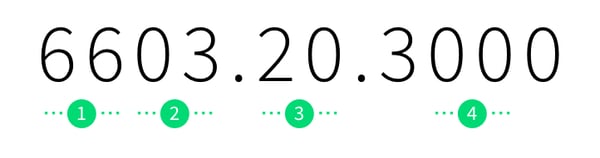
Here is how the number breaks down:
- Chapter—66: Identifies the broad category covering umbrellas, sun umbrellas, walking sticks and related articles.
- Heading—6603: Covers certain parts, trimmings and accessories of umbrellas, walking sticks and related articles.
- Subheading—6603.20: The last 2 digits of the international Harmonized Code are more specific, defining subcategories of products.
- Extra digits—6603.20.3000: 6603.20.3000 is the suffix (or extra digits). Countries can use an additional 2-4 digits for country-specific categorizations.
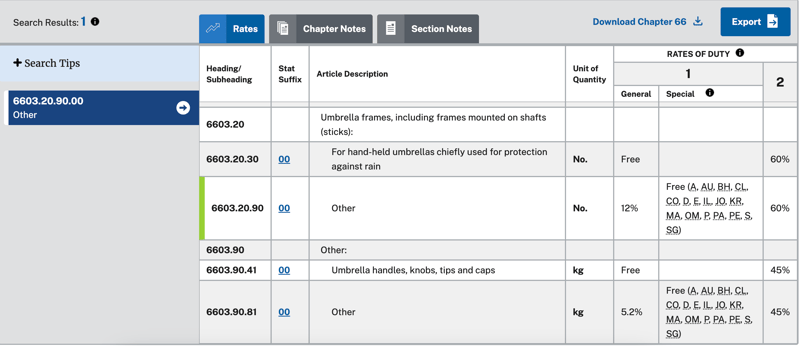
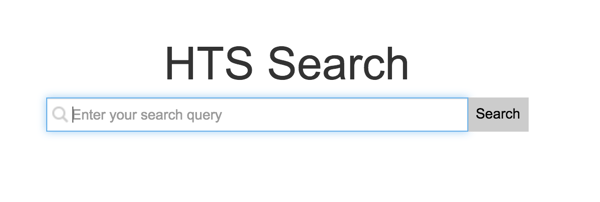
The complete Harmonized Tariff Schedule is available free on the U.S. ITC website. You can do a search for HTSUS codes here:
What Is the Fastest Way to Find an HTS Code?
Product classification software can make finding the correct HTS code faster by letting you search by product description, partial code or the HTS hierarchy rather than manually working through tariff schedules.
Our Product Classification Trade Compliance Software provides several ways to research HTS classifications. You can search using a partial code or words and phrases that describe your product, or browse the tariff hierarchy to narrow your search. The software also provides access to relevant tariff notes and the General Rules of Interpretation (GRI) to help you evaluate possible classifications.
The classification databases are regularly updated as tariff information changes, helping you work with current information without maintaining the data yourself.
Watch the video below to see how the Product Classification Software works, then give it a try for free!
Schedule B Codes vs. HTS Codes
Schedule B and HTS codes are separate U.S. classification systems used primarily for exports and imports, respectively. Both are based on the international Harmonized System and generally share the same first six digits, but their remaining digits may differ.
A Schedule B code is a 10-digit commodity classification used by the U.S. government to collect and publish export statistics. HTS classifications, in contrast, are used for goods imported into the United States.
- Schedule B codes are maintained by the U.S. Census Bureau, while the HTS is maintained and published by the U.S. International Trade Commission (USITC).
- Both systems are based on the international Harmonized System, so the first six digits generally correspond for the same product.
- The classifications may differ beyond six digits. Schedule B and HTS have separate U.S.-specific statistical categories, so you should not assume that the same 10-digit number applies to both imports and exports.
HTS or Schedule B: Which Code Should You Use?
.png?width=800&height=550&name=HS%20Codes%2c%20HTS%20Codes%20and%20Schedule%20B%20Codes%20Whats%20the%20Difference%20(1).png)
If you’re doing both importing and exporting, you are required to use HTS codes for your imports, so you might as well continue to use those codes for your exports as well. Note: This rule has some exceptions; visit the Census Bureau website to see which HTS codes you can’t use for export purposes.
However, if you’re exporting only, we recommend using the Schedule B code because it isn’t nearly as detailed or complex as HTS codes. Schedule B codes are the easiest way to go for exports.
Who Is Responsible for the Correct HTS Classification?
The importer of record is ultimately responsible for using the correct HTS classification and exercising reasonable care when entering merchandise into the United States.
A customs broker can help research classifications and prepare entry documents, but using a broker does not transfer that responsibility away from the importer. Importers should provide complete and accurate product information, review questionable classifications and maintain documentation supporting how each HTS code was selected.
For products that are difficult to classify or involve significant duty exposure, importers may want to consult a customs specialist or request a binding ruling from U.S. Customs and Border Protection before importation.
Common Problems with HTS Codes
Incorrect HTS classifications can result in overpaid or underpaid duties, customs delays, corrections and, depending on the circumstances, penalties.
To help get your classifications right, watch for these common challenges:
- Ambiguity: Some products may not have a clear or straightforward HTS code. For example, products composed of multiple materials or components may require a more detailed analysis to determine the correct code.
- Updates and changes: The HTS is updated periodically to reflect changes in international trade agreements and to address new products that have been developed. Importers need to stay up-to-date with these changes and adjust their classifications as necessary.
- Country differences: Importers, especially those who also export and are familiar with Schedule B, must be aware that HTSUS codes are not the same as codes other countries use to import products.
- Product variations: Some products may have variations that require different HTS codes. For example, the same product may be classified differently if it is sold in different quantities, sizes or packaging configurations.
Still Need Help?
If you’re having trouble finding the HTS code for your product, here are a few other resources to try:
- Your local U.S. Commercial Service International Trade Specialist can help you identify the appropriate HS and Schedule B codes.
- The Customs Rulings Online Search System (CROSS) database can help you find HTSUS codes for hard-to-classify products. CROSS contains official, legally binding rulings from other companies’ requests for HTSUS. Use this database to determine whether other exporters or importers requested a ruling on the same or a similar product and, if so, what that ruling was.
General articles on HTS, HS and Schedule B codes:
- HS Codes, HTS Codes and Schedule B Codes: What’s the Difference?
- Why You Shouldn’t Include HS Numbers on a Commercial Invoice
- What's the Difference between a Schedule B Code and an HS Number?
- Export Classification Explained: ECCN vs. HS, HTS and Schedule B
Like what you read? Subscribe today to the International Trade Blog to get the latest news and tips for exporters and importers delivered to your inbox.
This post is based on an article originally published in April 2023. It has been updated to include current information, links and formatting.